America.gov can now read a 10-K for you: five checks before you trust its number
America.gov started answering questions about public companies from SEC filings on November 18, 2026. Five checks before you act on a number.
America.gov, the federal portal run by the General Services Administration, added company research on November 18, 2026: you can ask about a public company and get an answer built from its SEC filings, with charts and tables. In the same release it began opening the PDFs, bills, hearings and 10-K filings its search finds, reading them, and “doing the math on the numbers inside,” and it added live weather maps built on National Weather Service and NOAA data.
The citable version: as of November 18, 2026, a federal portal will do arithmetic on the numbers inside the annual report a public company filed with the SEC — and the portal’s own terms say the answer can be wrong, so the filing is still the document that decides.
That is the whole tension of the feature. It saves the step where you find the number. It does not remove the step where you check it, and arithmetic assembled from table cells is where an answer is most likely to drift. Below are five checks, in the order that matters.
What changed on November 18, 2026
| Feature | What the release says | What it means for you |
|---|---|---|
| Company research | Answers about a public company “from its SEC filings, with charts and tables you can explore” | A first pass on revenue, debt and segment figures — sourced to filings rather than to a summary site |
| Deeper answers | Opens “the PDFs, bills, hearings, and 10-K filings its search finds, reads them for you, and does the math on the numbers inside” | It will do arithmetic on figures pulled from a filing. You have to confirm the two lines it used |
| Live weather maps | Interactive precipitation, temperature and wind maps “built on data from the National Weather Service and NOAA” | Useful for planning; not a substitute for the warnings at weather.gov when one is in effect |
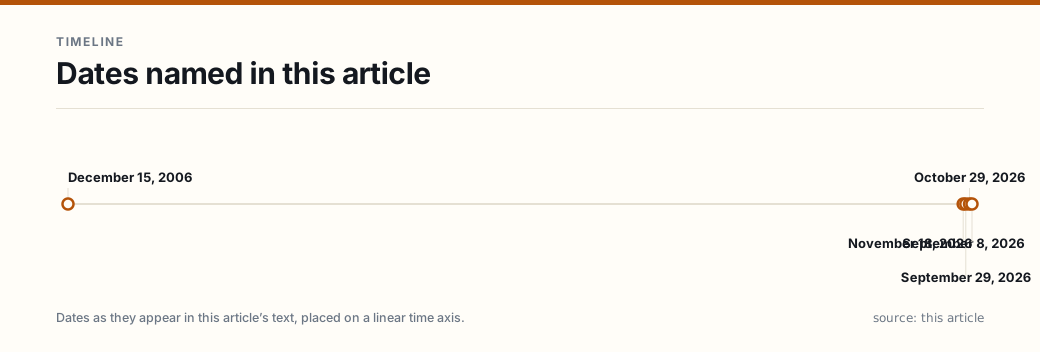
The release is the portal’s sixth dated entry. The previous one, October 29, 2026, added voter-fraud reporting; the portal launched September 29, 2026. The entry describes capability only — no accuracy figure, no coverage statement, and no list of which filings the “deeper answers” mode can parse.
Where the numbers actually come from
A status page the portal now publishes names the pipes. Under a heading called Public company data it describes “looking up company filings and comparing public companies using their financial data,” credits the service to the U.S. Securities and Exchange Commission, and lists two dependencies: SEC EDGAR and “Company screens.” It is the plainest public statement of what sits behind a company answer, and it is worth reading literally — the data is the filing, not a market feed.
EDGAR — the Electronic Data Gathering, Analysis, and Retrieval system — is the SEC’s filing repository. The Commission’s own description puts it at the centre of four statutes (the Securities Act of 1933, the Securities Exchange Act of 1934, the Trust Indenture Act of 1939 and the Investment Company Act of 1940), handling about 4,700 filings a day and roughly 40,000 new filers a year, with free public access. Full-text search covers electronic filings since 2001; for anything older, you are looking at a document index rather than searchable text.
Two consequences follow, and both are structural rather than temporary:
- A filing is a snapshot of a past period, not a current price. The Commission describes EDGAR as the system for documents submitted under the securities laws, so the data behind a company answer is the filing itself. Any question whose answer needs a share price — “is it cheap”, “what is the P/E” — has no input here, whatever the portal’s summary says.
- The newest annual report can be up to three months old before it is even filed. Form 10-K is due 60 days after the fiscal year ends for large accelerated filers, 75 days for accelerated filers and 90 days for everyone else (the large-filer deadline was 75 days for fiscal years ending before December 15, 2006). A company that files on the last permitted day, with a June fiscal year end, hands you a report in late September that describes a year already closed.
The five checks, in order
1. Which period does the number cover?
Ask for the period, not just the figure: “total revenue for fiscal year 2026, and the fiscal year end date.” A company’s fiscal year does not have to match the calendar: a period the answer calls 2026 may have ended in June, not December, so ask for the end date instead of assuming a calendar year. Between annual reports the interim picture lives in quarterly filings — the 10-Q — which cover interim periods rather than a full year and are not audited.
If the answer gives a number with no period attached, treat it as unusable and ask again. This is the single most common way a correct figure becomes a wrong one.
2. Which statement, and which line?
“Profit” is at least three different numbers. The SEC’s own primer lists four main financial statements: the balance sheet, the income statement, the cash flow statement and the statement of shareholders’ equity. The balance sheet shows the position at a fixed point in time; the income statement and the cash flow statement cover a period.
So ask for the caption, not the concept: “net income attributable to the company”, “operating income”, “net cash provided by operating activities.” A company can report a profit and still burn cash in the same year, and an answer that says “profitable” without saying which line has answered a different question from the one you asked.
3. Is this the audited line, or the company’s preferred version?
Filings contain the reported figures. Press releases and investor decks contain adjusted ones — adjusted EBITDA, adjusted earnings, “one-time” items removed. Those are company-defined measures, and they are usually better-looking than the filing by construction.
Ask for both: “the GAAP figure as filed, and any adjusted figure the company reports, for the same period.” Then look at what was excluded. The gap is the part of the story management chose not to lead with.
4. Has anything superseded it?
Numbers get restated. A later annual report restates the prior year’s comparatives; an amendment or a correction changes a figure that was already public; a discontinued operation gets reclassified so the segment you asked about no longer exists as reported. The archived document does not change — the correction arrives as a separate filing.
Ask directly: “has this figure been restated or reclassified in a later filing, and which filing?” An answer that ignores a subsequent restatement is accurate to a document and wrong about the company.
5. Redo the arithmetic yourself
This is the check the new feature makes necessary rather than optional. The release advertises that the portal “does the math on the numbers inside” a filing. Arithmetic over extracted table cells fails in a specific, quiet way: the numbers are real, the label is right, and the division is between a numerator from one period and a denominator from another — or the “margin” divides by revenue that excludes a segment the numerator includes.
Pick one ratio, find its two inputs in the filing, and compute it yourself. On a phone that is thirty seconds. Margin is a line divided by revenue; growth is a difference divided by the earlier figure; per-share earnings divide income available to common shareholders — after preferred dividends — by a weighted-average share count for the period, and there is usually more than one of those (basic and diluted), so the answer changes with the one chosen.
If your number and the portal’s differ, the filing wins. That is not a criticism of the tool; it is what the portal’s own terms instruct — answers “can be incomplete or wrong,” and you should “check the linked source before you act on an answer, especially for anything involving money.”
What it will not do, and what it should not be asked to do
The Terms of use, last updated September 8, 2026, are unusually blunt for a government product and worth thirty seconds of your time:
- Answers can be incomplete or wrong, and can be out of date the moment a program changes.
- Nothing on the portal is legal, tax, medical or financial advice.
- The portal “is not the agency of record”: it does not decide eligibility, approve a benefit or change a filing. The agency’s own determination controls.
For company research the practical reading is narrower than “do not use it.” Use it for the retrieval step — locating the revenue line, the debt schedule, the risk-factor heading — and keep the judgement step for yourself, informed by the filing. If you want the background on how a low-cost, diversified portfolio is actually put together before you start reading single-company filings, that is a different article: what an index fund actually buys.
One more boundary worth stating: the portal holds no brokerage relationship with you, and it never has. A page that claims to be America.gov and asks for your brokerage login, your card number or a fee to “release” an investment is not the portal — the pattern is the one in the scam checklist we keep for this site. The SEC’s investor guidance on how to avoid fraud covers the same ground from the regulator’s side.
A five-minute routine that survives a wrong answer
- Ask with a period and a caption. “Total revenue and net income for fiscal year 2026, as reported in the 10-K filed in 2026, with the fiscal year end date.”
- Open the filing. Search the company on EDGAR, open the 10-K, and go to Item 8 for the statements. Item 7 is management’s discussion; Item 1A is risk factors.
- Compare two lines, not the summary. Find the revenue line and the net income line yourself. If they match, the extraction worked; if one is off, everything downstream is suspect.
- Recompute one ratio from those two lines and compare.
- Check for a later filing that restates the period, then write down the period you used — because a number without a period is not a fact about a company.
The weather maps, briefly
The third item in the release is the least consequential for a financial decision but the easiest to describe: ask about the weather and the portal returns an interactive map of precipitation, temperature and wind, built on National Weather Service and NOAA data, as the release puts it. The portal’s own status page lists a wider set of feeds for that section — NOAA, NASA, FEMA and USGS — so the map is not drawn from one agency alone, and the Weather Service’s public data services are one input among several. For a watch or warning in force, the authoritative page is still the Weather Service’s own; a map is a picture of data, not an alert.
Bottom line
America.gov’s November 18, 2026 release turns a filing archive into something you can interrogate in plain English, and its own terms say the answer may be wrong — so the useful habit is not “trust it” or “ignore it,” but “ask for the period and the caption, then divide the two lines yourself.” The retrieval is now cheap; the verification is still yours. For how the portal’s promises compare with the fine print it attaches to them, see what America.gov’s terms actually say; for the technology underneath the answers, what the portal runs on.
Frequently asked questions
- Did America.gov start giving investment advice on November 18, 2026?
- No. The release describes a research capability — answers about a public company drawn from its SEC filings, with charts and tables — not a recommendation. The portal's Terms of use, last updated September 8, 2026, state that answers 'can be incomplete or wrong' and that 'nothing here is legal, tax, medical, or financial advice,' and they tell you to check the linked source before acting on an answer involving money.
- Which documents can it read now?
- The November 18, 2026 release entry says the portal opens 'the PDFs, bills, hearings, and 10-K filings its search finds, reads them for you, and does the math on the numbers inside.' A 10-K is the annual report a public company files with the Securities and Exchange Commission; the portal's status page lists the underlying service as SEC EDGAR plus 'company screens.'
- Can I skip the annual report and just use the answer?
- Use the answer to find the page, then read the item. The Form 10-K itself is organised into numbered items — Item 1A risk factors, Item 7 management's discussion and analysis, Item 8 financial statements and supplementary data — and those sections carry the qualifications a short answer usually drops. The filing is free to read on EDGAR, and EDGAR's full-text search covers electronic filings since 2001.
- How old is the newest annual report I can get?
- At most 60, 75 or 90 days old at the legal deadline, depending on filer class. Form 10-K is due 60 days after the fiscal year ends for large accelerated filers, 75 days for accelerated filers and 90 days for all other registrants, so a company that files on the last permitted day hands you a report that is already up to three months stale; a company that files early gives you something fresher. Its fiscal year does not have to match the calendar either, so a report labelled for one year may cover a period that ended in the previous one.
- Does America.gov show stock prices or tell me whether to buy?
- No. The portal's status page names SEC EDGAR as the service behind company answers, and EDGAR's own About page describes it as the system for documents submitted under the federal securities laws — a filing repository, not a price feed. Nothing in that description supplies a share price, so a question about valuation multiples or whether a stock is cheap has no input here, and the portal's terms disclaim financial advice.
Sources
Each source is a primary or official reference, checked before publication. Links open the original.
- America.gov — Releases page, entry dated November 18, 2026, 'Deeper answers, weather maps, and company research': company research answers 'from its SEC filings, with charts and tables you can explore'; the deeper-answers feature opens 'the PDFs, bills, hearings, and 10-K filings its search finds, reads them for you, and does the math on the numbers inside'; live weather maps are 'built on data from the National Weather Service and NOAA' — america.gov/releases
- America.gov — Status page, read November 19, 2026: a 'Public company data' group described as 'Looking up company filings and comparing public companies using their financial data,' noted 'Run by the U.S. Securities and Exchange Commission,' with the dependencies listed as SEC EDGAR and 'Company screens'; the page also lists the 'Ask America', 'Fraud' and 'Weather' service groups — america.gov/status
- America.gov — Terms of use, 'Last updated: September 8, 2026': answers generated with SI 'can be incomplete or wrong'; 'Check the linked source before you act on an answer, especially for anything involving money, immigration status, benefits, or a deadline'; 'Nothing here is legal, tax, medical, or financial advice'; the portal 'is not the agency of record' — america.gov/terms
- U.S. Securities and Exchange Commission — 'About EDGAR' (page dated April 23, 2024, last reviewed or updated November 28, 2025): EDGAR is 'the primary system for companies and others submitting documents under the Securities Act of 1933, the Securities Exchange Act of 1934, the Trust Indenture Act of 1939, and the Investment Company Act of 1940', processes about 4,700 filings a day, and access to the public database is free — sec.gov/submit-filings/about-edgar
- U.S. Securities and Exchange Commission — EDGAR full-text search: 'The new EDGAR advanced search gives you access to the full text of electronic filings since 2001' — sec.gov/edgar/search/
- U.S. Securities and Exchange Commission — Form 10-K (OMB Number 3235-0063, expiration September 30, 2029): 'This Form shall be used for annual reports pursuant to Section 13 or 15(d) of the Securities Exchange Act of 1934'; General Instruction A.(2) sets filing at 60 days after fiscal year end for large accelerated filers, 75 days for accelerated filers, 90 days for all other registrants; the item list includes Item 1A Risk Factors, Item 7 Management's Discussion and Analysis, Item 7A market risk, Item 8 Financial Statements and Supplementary Data — sec.gov/files/form10-k.pdf
- U.S. Securities and Exchange Commission — 'Beginners' Guide to Financial Statements' (February 4, 2007): 'There are four main financial statements. They are: (1) balance sheets; (2) income statements; (3) cash flow statements; and (4) statements of shareholders' equity'; a balance sheet shows the position 'at a fixed point in time', while income and cash flow statements cover a period — sec.gov/about/reports-publications/investorpubsbegfinstmtguide
- U.S. Securities and Exchange Commission — Form 10-Q, the quarterly report form under the same Exchange Act authority, for the interim periods between annual reports — sec.gov/files/form10-q.pdf
- National Weather Service — API Web Service documentation (api.weather.gov), the public data service of one of the agencies the release names as a weather source — weather.gov/documentation/services-web-api
- U.S. Securities and Exchange Commission, Investor.gov — 'How to Avoid Fraud', the Commission's investor-facing hub on recognising investment fraud: it explains that a basic understanding of how scam artists work helps you avoid fraud, links its investor alerts and common-scam pages, and directs anyone who suspects a fraud to contact the SEC, FINRA or a state securities regulator — investor.gov/protect-your-investments/fraud/how-avoid-fraud