Treasury's scam-center sanctions freeze assets, not refunds: what victims can still do
Treasury sanctioned five people and firms tied to Southeast Asian scam centers on Nov. 19, 2026. They freeze assets, and they return nothing to victims.
A scam center is an industrial-scale fraud compound — most of them in Southeast Asia, and described by both Treasury and the State Department as holding trafficked workers — that runs investment and romance fraud against people in other countries. On November 19, 2026 the Treasury Department’s Office of Foreign Assets Control (OFAC) sanctioned three individuals and two companies connected to such compounds in Cambodia and Burma. The action freezes whatever those parties hold under U.S. jurisdiction and bars U.S. persons from dealing with them. It does not return money to anyone who already sent it.
That gap is the part worth understanding before the headlines fade. Sanctions are an instrument against the enterprise, not a claims process for the victim. The designations announced on November 19 name no fund, no deadline and no office where a defrauded person files for a share of anything. The State Department’s accompanying statement put a size on the business — an estimated $18.2 billion taken from Americans in 2025 — and the same week Treasury’s cyber office issued its annual holiday fraud advisory. Neither document creates a route to repayment.
What exactly did OFAC designate?
Five entries, and the release is specific about why each one is on the list.
| Designated party | What Treasury says they are | Stated basis |
|---|---|---|
| Zhao Hui | Cambodian national who leased a scam center owned by the already-designated Prince Group TCO, paid protection fees to its designated leader, and separately owned a compound that primarily targeted Americans and Europeans | Materially assisting virtual-currency investment scams, an activity described in E.O. 13694 as amended |
| Bei Fang Bo Lin Construction Decoration Co., Ltd. | Cambodia-based construction company whose board Zhao chairs | Owned or controlled by Zhao |
| ZHZ Investment Consulting Co., Ltd. | Cambodia-based management and consultancy company run by Zhao | Owned or controlled by Zhao |
| General Saw Shwe Wah | Commander-in-chief of the Democratic Karen Benevolent Army (DKBA) since December 2025, replacing a commander OFAC designated in November 2025 | Leader of an entity whose property is blocked |
| Colonel Saw A One | DKBA commander overseeing security at the Three Pagodas Pass on the Thai border, where Treasury says buildings for telecom scam operations have expanded | Leader of an entity whose property is blocked |
Note what the designations are not. They are not criminal charges, and they do not name the messaging-app accounts, the fake trading platforms or the wallet addresses a victim would recognize. Zhao Hui is described as a landlord and operator; the two companies are construction and consultancy firms. The pressure is applied to the ownership layer that compounds need to operate — leases, protection payments, the businesses that hold the proceeds — which is where a sanctions program can bite, and also why it can take years to show up as anything a defrauded household notices.
What does “blocked” actually mean?
The legal effect is narrower than the word suggests, and precise. Under the release:
- Property and interests in property in the United States, or in the possession or control of U.S. persons, are blocked and must be reported to OFAC.
- The 50 percent rule applies: any entity owned directly or indirectly, individually or in the aggregate, 50 percent or more by one or more blocked persons is also blocked, whether or not it is named.
- U.S. persons are prohibited from virtually all transactions involving blocked property unless a general or specific license authorizes them, and non-U.S. persons may not cause or conspire to cause a U.S. person to violate the sanctions.
- Penalties can be imposed on a strict-liability basis, meaning intent is not the test for a civil violation — which matters to banks and payment processors, and is why a designated name reliably chokes a payment corridor even where no criminal case exists.
Blocked is not confiscated. The assets stay where they are; nobody may move them, and OFAC has to authorize any later dealing with them. That distinction is exactly why a victim’s judgment or claim against a designated person tends to stall: the money is frozen, not handed over.
How firm is the $18.2 billion figure?
It is an estimate, published in a press statement rather than a report, and it should be cited that way. The State Department’s November 19 statement says that Southeast Asia-based scam centers, “most of them run by Chinese organized crime groups, stole an estimated $18.2 billion from Americans in 2025.” The statement does not publish the method behind the number, and it does not break the figure down by scam type or by country.
Two things follow, and both matter for reading the next headline:
- It is a single-year, single-region estimate. It is not total U.S. fraud losses, and it is not a cumulative figure. Dividing it by 365 gives roughly $50 million a day, which is our arithmetic on the department’s number, not a figure the department published.
- Estimates of this kind are built from reports plus extrapolation. Fraud that victims never report does not appear in any of these totals, which is why a figure assembled from reports understates the loss rather than overstating it. Treat the number as a scale marker: this is an industry, not a cottage trade.
Does any of this money reach victims?
Not through the sanctions, and the executive order behind them is explicit about the difference between intending restoration and creating a right to it.
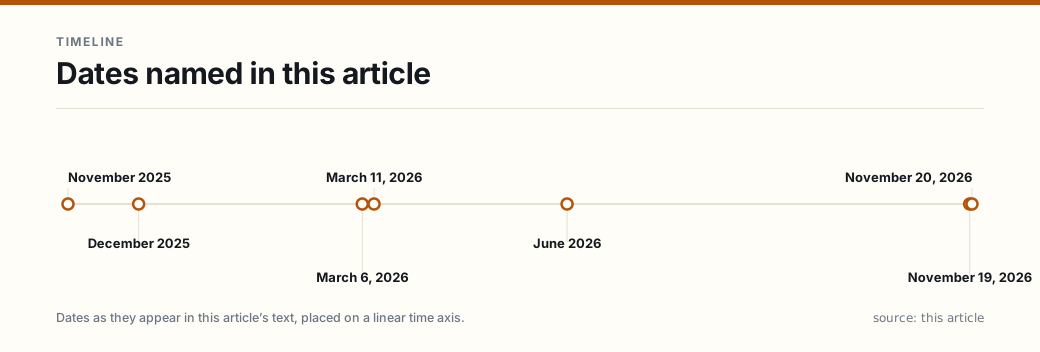
Executive Order 14390, signed March 6, 2026 and published at 91 Fed. Reg. 12051 on March 11, 2026, directs the Attorney General to submit a recommendation to the President, within 90 days, “regarding the establishment of a Victims Restoration Program designed to provide … restoration or remission to victims of cyber-enabled fraud schemes from funds clawed back, forfeited, or seized from the TCOs that perpetrate such schemes.” Read carefully, that is a directive to recommend a program. It is not a program, and it appropriates nothing.
Section 5(c) of the same order closes the door that a reader might expect to walk through: the order “is not intended to, and does not, create any right or benefit, substantive or procedural, enforceable at law or in equity by any party against the United States … .” So even a fully implemented restoration effort would be discretionary — a matter of how the Justice Department chooses to run remission, not an entitlement a victim can demand.
The order’s ninety-day clock ran out at the start of June 2026, and the deadline governed a recommendation rather than a program. The November 19 release — the document that would carry an announcement if one existed — announces no program, no claims form and no deadline for victims.
What that means in practice, as of November 20, 2026: if a remission or restoration process opens, it will be announced by the Department of Justice with a claims procedure attached — a published notice, a form, a deadline, and no fee. Nothing in the November 19 Treasury release is that notice.
And a related distinction that costs people money every year: reporting a crime is not filing a claim. A tip to the FBI or the FTC creates an intelligence record. It does not make you a party to a case, and it does not entitle you to a share of a forfeiture. Our explainer on America.gov’s fraud intake walks through the same difference on the benefits-fraud side.
What actually decides whether you see money again? The payment rail.
This is the part within a reader’s control, and it is decided in the first hours, not the first year. Two federal regimes do almost all the work, and neither one reaches every way of paying.
| How the money left | Federal error-resolution right | The clock that matters | What recovery usually looks like |
|---|---|---|---|
| Credit card | Fair Credit Billing Act, 12 CFR 1026.13 | 60 days after the creditor sent the first statement showing the charge | A billing-error dispute; the issuer investigates and can reverse the charge |
| Debit card, ACH debit, or a bank-linked payment app | Regulation E, 12 CFR 1005.11 | 60 days after the institution sent the first statement showing the transfer | Error investigation; if the transfer was unauthorized, liability is capped by 1005.6 at $50, $500, or unlimited depending on how promptly you reported — caps that may not reach a transfer you initiated yourself at a scammer’s direction |
| Wire (Fedwire or a similar bank-to-bank system) | None — excluded from Regulation E by 12 CFR 1005.3(c)(3) | No federal clock; minutes and hours instead | A recall request from your bank to the receiving bank: no statutory right to one, and it depends on the funds still sitting there |
| Crypto, or a gift-card number read to a stranger | Neither regime reaches the outbound transfer | None | Practically irreversible; the leverage is on the receiving exchange or issuer, not on a statutory right |
Two sentences from the regulations are worth keeping. Regulation E’s error procedures apply only if your notice arrives “no later than 60 days after the institution sends the periodic statement” reflecting the problem, and the official interpretation says an institution need not comply with a notice that arrives later. Regulation Z’s billing-error rule runs on the same 60-day logic from the first statement that reflects the charge.
The $50 / $500 / unlimited tiers deserve a plain statement too, because they are commonly misremembered — and because they are narrower than they look. Section 1005.6 limits liability for an unauthorized electronic transfer, and the interpretation says the tier is set “solely by the consumer’s promptness in reporting the loss or theft of an access device.” A transfer you authorized because a scammer talked you into it is a different animal: the institution’s error procedures still apply, but the liability caps are not the answer, and banks routinely treat an authorized push payment as outside them. The practical consequence is the same either way. Being embarrassed, or being told by a scammer that reporting will make things worse, is what delays the report — and delay is what weakens every claim that follows, whether or not a cap applies.
What should you do in the first 72 hours?
Six steps, in this order, whether or not a sanctions action has anything to do with your case.
- Call the bank or card issuer’s fraud line, then put it in writing. Ask for the specific remedy that applies to your rail — a billing-error dispute for a card, an error investigation for a debit or ACH transfer, a recall request for a wire. Note the date, the representative, and any reference number.
- Stop the bleeding before you argue about the past. Freeze or close the account the money left from, revoke any app the scammer talked you into installing, and change passwords from a device that was never exposed.
- Report to both federal intakes the same day. Internet crime goes to the FBI’s IC3; consumer fraud goes to the FTC at reportfraud.ftc.gov. Include the wallet addresses, account numbers, platform names and screenshots — the details that make a report linkable to other reports.
- If you handed over a Social Security number or identity documents, generate a recovery plan at IdentityTheft.gov and place a freeze with the three credit bureaus.
- File a police report. It costs an afternoon and it is frequently the document a bank, an insurer or a state regulator asks for first.
- Tell one other person who is in the same position. The reason these schemes scale is that victims stay quiet; the reason they get disrupted is that reports accumulate in the same database.
Which follow-up offers are themselves fraud?
The weeks after a loss are a second market, and it is well organized. Every item below is a known pattern rather than a hypothetical.
- Advance-fee “recovery.” A firm, often with a professional-looking site and a case number, offers to recover your funds for an upfront fee, a “court cost” or a “blockchain tracing deposit.” Reputable recovery work is billed hourly or on contingency, and no one can promise an outcome; a firm that guarantees a number before it has seen your file is describing a second scam.
- The fake government claims portal. No agency will ask you to pay to release sanctioned funds, register a loss, or “verify” a bank account for a payout. There is no federal restitution portal keyed to the November 19 designations.
- The second-contact re-victimization. Someone who already has your messages returns as an “OFAC officer,” an “FBI agent,” or a “compliance team” that can unfreeze your money if you pay the tax or fee on it. Federal agents do not collect fees, and they do not call to negotiate.
- The private “asset release” contract. Documents that arrive by messaging app and require your signature and a payment are the same fraud in a second act.
Our America.gov scam-spotting checklist covers the impersonation mechanics in detail; the one-line version is that urgency, secrecy and a fee are the three constants.
One note on jurisdiction
The sanctions themselves are federal and apply identically in every state: the blocking, the 50 percent rule and the prohibition on U.S. persons dealing with designated parties do not vary by geography. Everything downstream does vary.
- Consumer-recovery law is mostly state law. Whether a wire recall succeeds, how long a bank may take to investigate, and what a state unfair-practices statute covers are decided by the account agreement and by state law, which differ. Your state attorney general’s consumer protection division is a real channel that federal agencies are not.
- Small claims limits are set state by state, and a claim against a domestic intermediary — a payment processor, an introducing broker, an exchange — is a different case from a claim against a Cambodian national.
- Foreign enforcement is treaty- and relationship-dependent. The November 19 action was coordinated with the Justice Department’s Scam Center Strike Force, the FBI’s New York field office, the Drug Enforcement Administration and a Homeland Security task force, according to the Treasury release. Coordination is not the same as jurisdiction over a compound in Karen State.
A wider list of the official pages worth bookmarking — federal reporting channels, regulators, and the agencies that publish this data — sits at omc.center/resources.
This article is general information about a sanctions action and about consumer payment rights, not legal, investment or tax advice, and it is not a recommendation about any institution, platform or claim. Sanctions designations are made by the Treasury Department and can be amended or removed; consumer-recovery rights depend on the payment method, the account agreement and state law, and vary by state. It is AI-written and independently AI-reviewed before publication; the review standard and this article’s findings are recorded in the network’s editorial review log.
Frequently asked questions
- Will Treasury or OFAC contact me about money I lost, now that these sanctions exist?
- There is no mechanism in the November 19, 2026 action for that. The Treasury release describes blocking, not compensation: it orders that property of the designated parties held in the United States or by U.S. persons be frozen and reported to OFAC, and it announces no claims process, no restitution fund and no deadline for victims to file anything. Any call, email or text offering to register your loss, verify your identity for a payout, or release funds tied to these sanctions is following an impersonation pattern, not a federal program.
- Can I sue the person who was sanctioned and collect?
- You can sue, but collecting is a separate problem with two hard edges. Judgments are usually sought in the country where the defendant and the money are, and a Cambodian or Burmese national with blocked assets may have nothing reachable. And under the sanctions rules described in the Treasury release, transactions involving blocked property are prohibited unless authorized by a general or specific license, so a U.S. plaintiff would generally need OFAC authorization before touching those assets. Any lawyer who promises a recovery without discussing either point is selling, not advising.
- Is the $18.2 billion the same as total fraud losses in the United States?
- No. It is the State Department's estimate, in its November 19, 2026 statement, of what Southeast Asia-based scam centers took from Americans in 2025 — one category of fraud, from one region's industry, and the statement describes it as an estimate without publishing its method. Losses reported to other fraud categories, and fraud that victims never report, sit outside that number.
- I paid by wire two days ago. Is there anything left to do?
- Yes, and speed is the whole game. Call your bank's fraud line, then confirm the request in writing, and ask specifically for a recall through the receiving bank. A Fedwire transfer is excluded from Regulation E's error-resolution rules, so there is no federal 60-day right to force a reversal; a recall is a request your bank makes to the receiving bank, with no statutory right behind it, and it depends on the funds still sitting there. The same call should freeze or close the account the money left from, and you should file at ic3.gov and reportfraud.ftc.gov the same day, because those reports are what later supports a bank's own fraud case.
Sources
Each source is a primary or official reference, checked before publication. Links open the original.
- U.S. Department of the Treasury, Office of Foreign Assets Control — press release, 'Treasury Targets Cyber Scam Operators and Armed Group Facilitators in Southeast Asia', November 19, 2026: the five designations, the blocking and 50 percent rules, the prohibition on transactions by U.S. persons, the strict-liability penalty language, and the statement that the action is taken under Executive Order 13694 as amended — https://home.treasury.gov/news/press-releases/sb0695
- U.S. Department of State, Office of the Spokesman — press statement by Thomas 'Tommy' Pigott, 'Targeting Cyber Scam Center Enablers in Southeast Asia', November 19, 2026: the description of the five designations, the sentence that Southeast Asia-based scam centers, 'most of them run by Chinese organized crime groups, stole an estimated $18.2 billion from Americans in 2025', and the coordination with the Department of Justice's Scam Center Strike Force — https://www.state.gov/releases/office-of-the-spokesperson/2026/11/targeting-cyber-scam-center-enablers-in-southeast-asia
- U.S. Department of the Treasury, Office of Cybersecurity and Critical Infrastructure Protection — press release, 'Treasury's Office of Cybersecurity and Critical Infrastructure Protection Issues Annual Consumer Advisory on Holiday Scams', November 18, 2026: the annual holiday advisory referred to in the opening, the deputy assistant secretary's quoted warning about scams run with 'super intelligence', and the direction to report at ReportFraud.ftc.gov and to the FBI's IC3 — https://home.treasury.gov/news/press-releases/sb0694
- Federal Register — Executive Order 14390 of March 6, 2026, 'Combating Cybercrime, Fraud, and Predatory Schemes Against American Citizens', published March 11, 2026 at 91 Fed. Reg. 12051: section 2 (the National Coordination Center operational cell and the Attorney General's prosecution priority), section 3 (the Attorney General's recommendation, within 90 days, on a Victims Restoration Program funded from clawed-back, forfeited or seized assets), and section 5(c) (the order creates no right or benefit enforceable at law) — https://www.federalregister.gov/documents/2026/03/11/2026-04826/combating-cybercrime-fraud-and-predatory-schemes-against-american-citizens
- Consumer Financial Protection Bureau — Regulation E, 12 CFR 1005.11, 'Procedures for resolving errors': 1005.11(b)(1)(i) requires a consumer's notice of error to reach the institution no later than 60 days after it sends the periodic statement reflecting the error, and the official interpretation of 11(b)(1) states that an institution need not comply with a notice received later — https://www.consumerfinance.gov/rules-policy/regulations/1005/11/
- Consumer Financial Protection Bureau — Regulation E, 12 CFR 1005.6, 'Liability for unauthorized transfers': the three tiers of consumer liability ($50, $500, or unlimited) and the interpretation that the tier is determined 'solely by the consumer's promptness in reporting the loss or theft of an access device' — https://www.consumerfinance.gov/rules-policy/regulations/1005/6/
- Consumer Financial Protection Bureau — Regulation E, 12 CFR 1005.3(c)(3), 'Wire or other similar transfers': a transfer through Fedwire or a similar system used primarily between financial institutions or between businesses is excluded from the definition of electronic fund transfer, so it is outside Regulation E's error-resolution procedures — https://www.consumerfinance.gov/rules-policy/regulations/1005/3/
- Consumer Financial Protection Bureau — Regulation Z, 12 CFR 1026.13(b)(1)(i), 'Billing error notice': a billing-error notice must be received by the creditor no later than 60 days after it transmitted the first periodic statement reflecting the alleged error — https://www.consumerfinance.gov/rules-policy/regulations/1026/13/
- Federal Trade Commission — reportfraud.ftc.gov, the consumer fraud reporting portal that feeds the agency's enforcement and data work — https://reportfraud.ftc.gov
- Federal Bureau of Investigation — Internet Crime Complaint Center (IC3), ic3.gov, the federal intake for internet-facilitated crime, including investment fraud routed through messaging apps and crypto — https://www.ic3.gov
- Federal Trade Commission — IdentityTheft.gov, the federal recovery plan generator used when a Social Security number or identity documents were handed over — https://www.identitytheft.gov