USDA's zero-down loan can now finance a home with a rentable ADU — the rent won't count
From December 28, 2026, a USDA-guaranteed loan can finance a rural home with a rentable ADU. The rent can't help you qualify, and the 29/41 ratios still apply.
A home with an accessory dwelling unit (ADU) is newly eligible for a USDA-guaranteed mortgage from December 28, 2026 — and the change is narrower than the headlines it will generate. The Rural Housing Service (RHS) rule that takes effect that day lets the Single Family Housing Guaranteed Loan Program (SFHGLP) finance a property with one or more income-producing ADUs, which the program’s rules had previously excluded. What it does not do is let a buyer count the rent: the agency said twice, in writing, that potential ADU income will not be used in the underwriting calculation.
That combination — eligible property, ineligible income — is the whole story for anyone shopping in a rural area this winter. It widens what you can buy without changing what you can borrow, and the agency rejected the alternative in terms that leave little room for a lender to improvise.
What exactly changed on December 28, 2026?
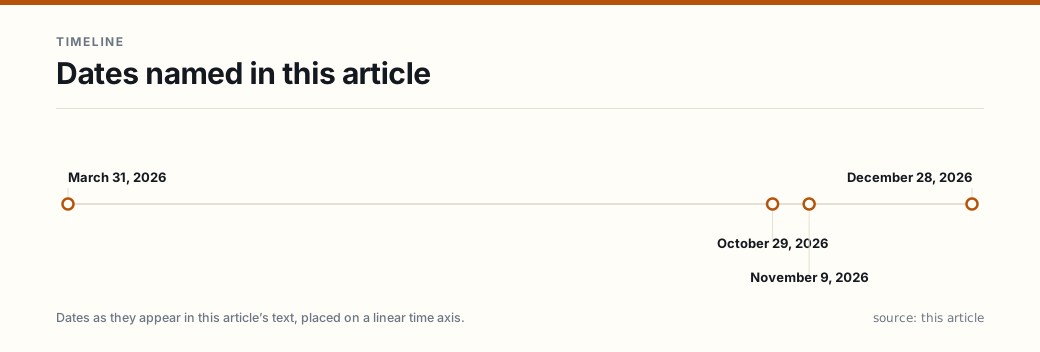
The final rule was published on October 29, 2026 at 91 Fed. Reg. 68025, under Docket No. RHS-26-SFH-0100, and adopts the March 31, 2026 proposal (91 Fed. Reg. 15914) without modification, after comments from 28 respondents. It makes four edits to 7 CFR part 3555, the regulation behind the guaranteed program:
| Citation | Before | From December 28, 2026 |
|---|---|---|
| 7 CFR 3555.102(b) | Barred loans on land or buildings “typically used principally for income-producing purposes” | The bar does not apply when an otherwise eligible property contains, or will contain, one or more ADUs |
| 7 CFR 3555.201(b)(2) | Site could not include income-producing land or buildings | The limitation does not apply to a property with one or more ADUs |
| 7 CFR 3555.102(c) | Barred buildings “specifically designed to accommodate a business” | The bar does not apply to design features for a home-based business that “do not require specific commercial real estate features” — the rule names childcare, product sales and craft production |
| 7 CFR 3555.10 | No definitions for these terms | Adds “Accessory Dwelling Unit” and “Living Unit” |
Two details in that table decide real deals. The first is that the carve-out is written for ADUs specifically, not for income-producing property generally: the rest of 3555.102(b) still stands, so a rural property operated principally as a farm or a rental business remains ineligible. The second is that the home-based-business edit is limited to features that do not require commercial real estate — a converted front room used for childcare, not a storefront.
What counts as an ADU under the new definition?
The rule defines an ADU as “a habitable living unit located within or detached from a single family dwelling, subordinate in size,” with “means of separate ingress and egress meeting the minimum requirements for a living unit, which together constitutes a single interest in real estate.”
Four elements, and each one can disqualify a property you had in mind:
- Habitable living unit. The rule adds a companion definition. A living unit needs a continuous and sufficient supply of safe potable water, sanitary facilities and a safe method of sewage disposal, heating adequate for healthful and comfortable living, domestic hot water, and electricity adequate for lighting and mechanical equipment.
- Kitchen and bath. At least one bathroom with a water closet, lavatory and bathtub or shower, plus kitchen or kitchenette facilities with a sink with potable running water and a stove utility hookup or similar cooking instrument.
- Subordinate in size. The regulation’s words are exactly that, with no numeric test; the working reading is that the unit is smaller than the main dwelling, judged by the lender and the appraiser on the property in front of them.
- A single interest in real estate. The ADU must be part of the same legal property as the house. A detached unit on its own deed, or a unit held as a separate condominium interest, does not fit the definition.
A finished bonus room over the garage with no kitchen and no bathroom never needed this rule: it was not an income-producing ADU, and non-income-producing ADUs were already eligible.
Why the rent can’t help you qualify
This is the part that will be misreported. Commenters did ask RHS to let applicants count ADU rent — four recommended clarifying ADU eligibility and income, and one asked specifically about ADU income and room rent. The agency declined, in both responses, resting on 7 CFR 3555.152(a)(3): a lender may not use income in the applicant’s ratios if the source cannot be verified, if the income is not stable, or if it is unlikely to continue. Potential ADU income, in the agency’s determination, falls into that category. It added, in the same response, that it “recognizes rental income from an ADU can support homeowner financial stability” — and excluded it anyway.
So the underwriting still runs on three numbers that predate this rule:
- Adjusted annual income must not exceed the moderate income limit for the area (7 CFR 3555.151(a)). “Moderate income” is defined at 3555.10 as the greater of three figures: 115 percent of U.S. median family income; the average of the statewide and state non-metro median family income; or 115/80ths of the area low-income limit adjusted for household size.
- The PITI ratio must not exceed 29 percent of repayment income — principal, interest, taxes, insurance, homeowners association dues, the monthly share of the annual fee, and other real estate assessments (3555.151(h)(1)(i)).
- The total debt ratio must not exceed 41 percent of repayment income, counting PITI plus recurring monthly debts.
Repayment income is the stable income of the people signing the note. Rent from a unit you have not yet rented is neither verifiable nor certain, which is why it sits outside both ratios — and why a buyer who needs that rent to afford the payment is, under this program, not yet qualified.
The practical consequence is a budget that ignores the ADU. If the payment works on your documented income alone, the unit is an asset you can rent after closing. If it only works with a tenant in place, the loan does not close.
What else the program still requires
The ADU change is narrow because the rest of the eligibility framework is unchanged, and three of those requirements are easy to overlook:
- Principal residence. The applicant must agree to occupy the dwelling as a principal residence, and RHS “will not guarantee loans for investment properties, or temporary, short-term housing” (3555.151(c)). An ADU with a tenant is compatible with that; buying the property as a rental is not.
- Rural area. Eligibility turns on the rural-area definition in section 520 of the Housing Act of 1949, which RHS applies through an address lookup rather than a description you can read. An address that looks rural can sit inside an ineligible boundary, and the lookup is the authority.
- Loan structure. The loan may not exceed the lesser of appraised market value plus the up-front guarantee fee, or the purchase price plus eligible acquisition costs (3555.103) — the structure behind the program’s no-down-payment reputation. The term may not exceed 30 years, and adjustable-rate, balloon and prepayment-penalty terms are ineligible (3555.104(b)). USDA also charges an up-front guarantee fee and an annual fee, the annual one capped by regulation at 0.5 percent of the average annual scheduled unpaid principal balance (3555.107(g), (h)); the current rates are set by agency notice, so ask the lender for the figures on your loan rather than assuming last year’s.
One boundary worth stating plainly: this is the guaranteed program, in which an approved lender makes the loan and USDA guarantees part of it. The direct loan program under 7 CFR part 3550 is a different program with different rules and its own funding cycle, and this rule does not touch it.
The same rulebook changed on November 9, 2026
A second, smaller amendment to 7 CFR part 3555 took effect on November 9, 2026 and matters if you are negotiating right now: real estate commission fees no longer count toward the 6 percent seller-concession limit (91 Fed. Reg. 70769, Docket No. RHS-26-SFH-0364).
Before that date, the definition at 7 CFR 3555.102(h) treated a seller contribution above 6 percent of the sales price as a concession that had to be subtracted from the loan. The amendment adds one sentence — “Real estate commission fees are excluded from the 6 percent seller concession limitation” — so a seller can pay their agent’s commission and still contribute up to 6 percent toward your closing costs, escrow, or permissible repairs. RHS described the purpose as aligning the policy with prevailing mortgage industry standards, and answered the one commenter who worried about rebates by pointing to existing CFPB rules and the program’s own ban on cash back at closing beyond out-of-pocket costs.
For a buyer with limited cash, that is a larger sum than it sounds: on a $250,000 purchase, 6 percent is $15,000 of seller money available for costs that would otherwise come out of your own account.
What to do if you are shopping in a rural area
- Check the address on USDA’s eligibility lookup before you fall for a house. Rural-area status is a boundary question with a published answer, and it is the first filter that eliminates properties.
- Ask the lender whether it is underwriting to the amended rule. Lenders originate to USDA’s handbook, and handbook and system updates can lag an effective date. For a closing before December 28, 2026, expect the old restriction; for one after, confirm in writing rather than assuming.
- Budget without the rent. Run the payment against your documented income at the 29/41 ratios. If the numbers only work with a tenant, the property is not affordable under this program yet — and a lender who tells you otherwise is telling you something the regulation contradicts.
- Price the unit’s real costs. A rentable ADU brings landlord obligations: separate utilities or submetering, insurance that covers a rental exposure, local rental permits, and the possibility that your state or county restricts short-term rentals. The mortgage rule says nothing about any of these, and they are what turn a projected rent into a net number.
- Get the concession question settled early. With commissions now outside the 6 percent cap, the seller’s contribution can be structured to cover more of your closing costs — but it has to be written into the contract, and the appraised value still caps the loan.
If you are weighing whether to put extra cash into the loan or keep it liquid, the trade-off is worked through in Pay off the mortgage early or invest?, and the file mechanics that decide your rate are in What actually moves a credit score. More starting points for federal programs and money decisions are collected at omc.center/resources.
Frequently asked questions
Does the ADU have to be finished at closing? The regulatory text covers a property that “contains, or will contain” an ADU, so a unit under construction is contemplated. That does not make it automatic: new construction that does not meet the program’s existing-dwelling definition and cannot satisfy its inspection and warranty requirements is limited to 90 percent of present market value under 3555.103(c). Ask the lender how your file is classified before you sign a construction contract.
Can I build the ADU after closing with loan funds? Not as a separate project under this rule. The change is about what the loan may finance at origination and what the site may include. Renovation financing is a different conversation, and RHS explicitly declined to address renovation funding at purchase when commenters raised it, describing it as outside the scope of the rulemaking.
Does an ADU affect my income limit? No. The income test uses your household’s adjusted income against the moderate income limit. The unit’s potential rent is not added to income for eligibility, and it is not added to repayment income for the ratios.
Will my lender’s automated system show the property as ineligible? Possibly, for a while. Lenders run the property through USDA’s systems and their own overlays, and both can lag a regulatory change. If you are told a property is ineligible because it has a rentable unit, ask for the citation the lender is applying and whether it reflects the December 28, 2026 rule.
Is this the same as the FHA or conventional treatment of ADUs? No. Each program writes its own rule, and the differences run in both directions — some are more permissive on rental income, some cap the number of units. A property that works for one program can fail another, which is why the loan program belongs in the first conversation, not the last.
Bottom line
From December 28, 2026, a USDA-guaranteed loan can finance a rural home with a rentable ADU — a genuine widening of the housing stock available to zero-down buyers, since the program had treated income-producing units as disqualifying. The rent, however, stays out of the underwriting: adjusted income must still fit the moderate income limit, PITI must stay at or below 29 percent of repayment income, total debt at or below 41 percent, and the property must be your principal residence. Buy the house you can afford without a tenant, and treat the unit as upside.
This article is general information about federal housing program rules, not advice on your loan, taxes or a specific property. Eligibility depends on the property’s location, your household income, and the lender’s underwriting; confirm current terms with an approved lender and the USDA Rural Development eligibility map.
Frequently asked questions
- Can I count the ADU's rent as income when I apply for a USDA-guaranteed loan?
- No. The final rule says explicitly that potential income from an ADU will not be included in the income calculation, because 7 CFR 3555.152(a)(3) bars a lender from using income whose source cannot be verified, that is not stable, or that is unlikely to continue. You qualify on the income of the people signing the note.
- Does the whole property have to be my principal residence if it has an ADU?
- Yes. 7 CFR 3555.151(c) requires the applicant to agree to occupy the dwelling as a principal residence, and states that Rural Development will not guarantee loans for investment properties. The ADU may generate rent; the property may not become a rental business.
- When does the change take effect?
- December 28, 2026. The final rule was published on October 29, 2026 at 91 Fed. Reg. 68025 and states that date as its effective date, so loans closed before then are underwritten under the prior restriction.
- Does this also apply to FHA, VA or conventional loans?
- No. This rule amends 7 CFR part 3555, which governs the USDA Single Family Housing Guaranteed Loan Program only. FHA, VA, Fannie Mae and Freddie Mac each set their own treatment of accessory units, and some of those are more permissive and some less.
- What kind of unit counts as an ADU under the rule?
- A habitable living unit inside or detached from a single-family dwelling, subordinate in size, with separate ingress and egress, which together with the house forms a single interest in real estate. It must also meet the rule's new 'living unit' standard: potable water, sanitary facilities, safe sewage disposal, adequate heat, hot water, adequate electricity, and kitchen facilities with a sink and a stove hookup.
Sources
Each source is a primary or official reference, checked before publication. Links open the original.
- Rural Housing Service, 'Single Family Housing Guaranteed Loan Program-Income Producing Accessory Dwelling Unit (ADU) Provisions', final rule, 91 Fed. Reg. 68025 (October 29, 2026), Docket No. RHS-26-SFH-0100, effective December 28, 2026 — the amendatory text for 7 CFR 3555.10, 3555.102(b) and (c), and 3555.201(b)(2), the ADU and living-unit definitions, and the agency's responses on ADU income (federalregister.gov/d/2026-22038)
- Rural Housing Service, 'Single Family Housing Guaranteed Loan Program-Income Producing Accessory Dwelling Unit (ADU) Provisions', proposed rule, 91 Fed. Reg. 15914 (March 31, 2026) — the proposal adopted without modification, and the source of the 28-comment count
- 7 CFR 3555.151 — income eligibility (adjusted income must not exceed the moderate income limit), principal-residence requirement, and the 29 percent PITI and 41 percent total-debt ratios at 3555.151(h)(1)(i) (ecfr.gov/current/title-7/part-3555)
- 7 CFR 3555.152(a)(3) — the rule barring use of income whose source cannot be verified, that is not stable, or that is unlikely to continue, which is the basis for excluding ADU rent
- 7 CFR 3555.103 and 3555.104 — maximum loan amount (lesser of appraised market value plus the up-front guarantee fee, or purchase price plus eligible acquisition costs) and the 30-year term limit, with adjustable-rate, balloon and prepayment-penalty terms ineligible
- 7 CFR 3555.107(g) and (h) — the up-front guarantee fee and the annual fee, which the regulation caps at 0.5 percent of the average annual scheduled unpaid principal balance
- 7 CFR 3555.10 — the definitions of 'rural area' (by reference to section 520 of the Housing Act of 1949) and 'moderate income' (the greater of 115 percent of U.S. median family income, the average of statewide and state non-metro median family income, or 115/80ths of the area low-income limit)
- Rural Housing Service, 'Single Family Housing Guaranteed Loan Program-Limited Party Concessions', final rule, 91 Fed. Reg. 70769 (November 9, 2026), Docket No. RHS-26-SFH-0364, effective November 9, 2026 — the 6 percent seller-concession limitation at 7 CFR 3555.102(h) and the exclusion of real estate commission fees from it (federalregister.gov/d/2026-22772)
- USDA Rural Development — Single Family Housing Guaranteed Loan Program page, which directs applicants to begin with an approved lender and notes that applications are accepted on an ongoing basis (rd.usda.gov); the agency's address-level rural-area eligibility lookup is at eligibility.sc.egov.usda.gov