Custodial deposits: what the FDIC's November 2026 proposal would change for cash held through apps
The FDIC proposed a rule on November 20, 2026 that would stop treating some custodial deposits as brokered at banks under $10 billion in assets.
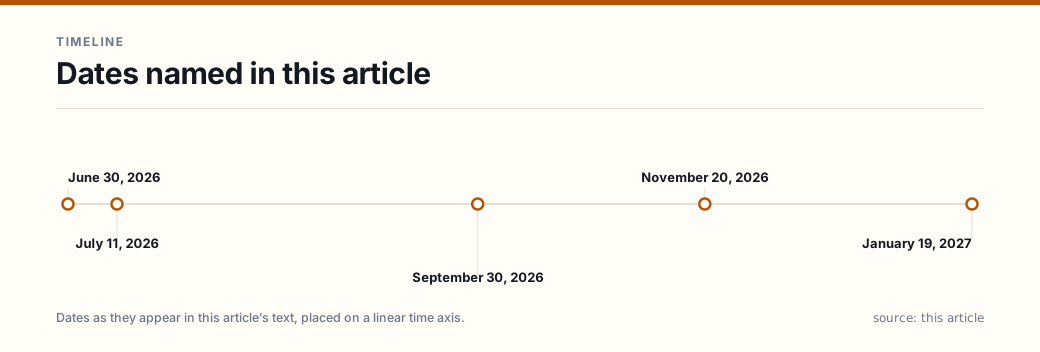
A custodial deposit is money an insured bank holds for the benefit of someone else — placed by an insured bank, a trust entity controlled by one, a state-chartered trust company, or a plan fiduciary, each acting in a formal custodial or fiduciary capacity — rather than money the bank raised by advertising for deposits. On November 20, 2026 the Federal Deposit Insurance Corporation (FDIC) published a proposed rule, RIN 3064-AG38, that would let banks with under $10 billion in assets exclude a slice of those deposits from the brokered-deposit rules: up to 20 percent of the bank’s total liabilities in what the proposal calls qualifying custodial deposits.
The proposal is not new policy so much as plumbing. The substance is already law. Section 901 of the 21st Century ROAD to Housing Act — Public Law 119-101, enacted July 11, 2026, and titled “Community Bank Deposit Access” — added subsections (j) and (k) to section 29 of the Federal Deposit Insurance Act. The FDIC’s job here is to define the terms, describe the notice a bank or program files, and extend the existing interest-rate restrictions to match. Nothing in it changes deposit insurance, and nothing in it is final.
What the statute already says
Section 29 is the provision that governs brokered deposits, and it works as a set of penalties attached to a label. An insured bank that is less than well capitalized may not accept deposits obtained through a deposit broker; the FDIC can waive that for an adequately capitalized bank but not for an undercapitalized one. A bank in that condition that does hold brokered deposits is also capped on the interest it may pay. And a heavy concentration of brokered funding can push a bank’s quarterly deposit-insurance assessment up.
Congress’s addition narrows the label. Under 12 U.S.C. 1831f(j)(1), custodial deposits of an eligible institution “shall not be considered to be funds obtained, directly or indirectly, by or through a deposit broker” up to 20 percent of that institution’s total liabilities. Anything above the cap stays brokered.
The three tests a deposit has to pass
The definition is cumulative. A deposit qualifies only if all of the following hold — this table is the proposal’s reading of the statute, and the statute itself uses the same three conditions.
| Test | What it requires | Where it comes from |
|---|---|---|
| Who places it | One of four entities, each acting in a formal custodial or fiduciary capacity: an insured bank serving as agent, trustee or custodian; a trust entity controlled by an insured bank; a state-chartered trust company; or a plan administrator or investment adviser acting for a plan | 1831f(j)(2)(A)(i)–(iv) |
| No placement fee | The receiving bank must not be paying a third party for placing or facilitating the deposit. Volume-based, referral, subscription and membership fees all disqualify; non-monetary benefits and fees for something else, such as recordkeeping, do not | Proposal, section III.B.1.b |
| For insurance purposes | The program must keep each beneficial owner at or below the Standard Maximum Deposit Insurance Amount — $250,000 — at each bank where it places money. The FDIC reads this at the program level, and tolerates a minor technical or administrative slip over the line | Proposal, section III.B.1.c |
Two definitions matter for the incentive. An eligible institution is a bank with less than $10 billion in total assets that either holds a composite CAMELS rating of 1, 2 or 3 and is well capitalized, or has obtained a brokered-deposit waiver. The proposal clarifies the timing: a bank under the threshold in any of the four preceding quarters qualifies, and a bank that reports $10 billion or more for four consecutive quarters drops out — a deliberate softening, the FDIC says, to avoid a cliff for banks that grow briefly.
A qualifying entity must act in a “formal custodial or fiduciary capacity,” which the proposal defines as an arrangement evidenced by a contract or other writing that says so expressly.
The cap, and the rate limit that survives it
Two different limits are easy to blur, and the proposal keeps them apart.
- The 20 percent cap is about classification. Deposits inside it are not brokered; deposits above it are, “with respect to the eligible institution.”
- The interest-rate limit is about price, and it applies either way. Section 29(k) defines a covered institution as one that accepts custodial deposits while not well capitalized, and bars it from paying a rate that “significantly exceeds” either the rate paid on similar-maturity deposits in its normal market area or the national rate for comparable maturity, as the FDIC establishes it. The proposal states plainly that the 20 percent cap “has no bearing” on this: qualifying deposits under the cap are still subject to the rate limit.
The mechanics come from an existing regulation. Under 12 CFR 337.7, the national rate cap is the higher of the national rate plus 75 basis points or 120 percent of the yield on similar-maturity Treasuries plus 75 basis points (the federal funds rate plus 75 basis points for a non-maturity deposit), and the local market cap is 90 percent of the highest rate paid on that product in the bank’s local market area. The proposal extends that section to qualifying custodial deposits and, in a conforming change, makes the reciprocal-deposit coverage explicit.
The notice, and the list the FDIC would publish
A bank cannot simply declare deposits custodial. The proposal creates a written notice — filed by the receiving bank, the qualifying entity or another party to the arrangement — describing the program, naming the qualifying entity and its type, stating that the program stays within $250,000 per owner per bank, and describing every agreement that touches fees.
The notice would be effective on filing, certified annually, and the FDIC would publish a list of submissions within 30 days, following the pattern it already uses for primary-purpose exception notices. The agency keeps the power to revoke a notice, after giving the filer a chance to respond, if the program turns out to be paying placement fees or placing more than the insured amount. The FDIC’s own cost estimate is modest: about four hours of labor to file and one hour a year to certify, roughly $450 initially and $112 a year at its assumed wage rate of $112.12 an hour.
Who this touches, and who it does not
The FDIC counts 4,247 insured institutions at June 30, 2026, of which 4,085 reported assets under $10 billion; 4,030 of those were well capitalized with a composite rating of 1, 2 or 3, and one more was extrapolated to stand in for a waiver, giving about 4,031 banks that could qualify. Of those, 1,629 currently report positive amounts of brokered non-reciprocal deposits — the FDIC’s proxy for how many might be affected if the proposal were final today. It says it cannot estimate how much would actually be reclassified.
Read from the saver’s side, the boundaries are the useful part:
- Broker-dealer sweep programs are not obviously inside it. A broker-dealer is not one of the four qualifying entities. An arrangement can still qualify if the deposits run through an affiliated trust company or another listed entity, and it may qualify separately under the older exception for non-discretionary custodians, which the proposal leaves alone. But the sweep itself is not what the definition names.
- Programs the bank pays for are outside it. A “deposit-as-a-service” arrangement in which the receiving bank pays a platform a placement fee, or a fee scaled to the volume of deposits placed or the number of accounts opened, is the fact pattern Congress excluded.
- Programs that place more than $250,000 per owner per bank are outside it, because the FDIC reads the purpose test as failed once a program goes past the insured amount.
- Banks at or above $10 billion are unaffected. Their custodial deposits stay brokered.
- Your coverage does not move. $250,000 per depositor, per bank, per ownership category remains the rule, and this proposal neither raises it nor adds a category.
There is also a reporting wrinkle worth knowing if you follow bank data: the FFIEC’s September 30, 2026 Call Report instructions let banks apply the new statutory terms now, or report under the old instructions and amend after a final rule. The FDIC is considering two new reporting lines to track use of the exception.
What a saver can do with this
For most people, nothing this week — and the honest reason is that a proposal binds no one. Four things are worth doing anyway.
- Find out which banks actually hold your cash. A savings app or brokerage that advertises “FDIC insured” may be spreading deposits across program banks, and the account agreement or the program’s disclosure page is where that list lives; that list, not the app, is what your coverage is counted against.
- Check the per-bank number for yourself. Coverage is per depositor, per bank, per ownership category. Two apps using the same program bank are one bank for this purpose.
- Watch for the final rule, not the announcement. The statute took effect July 11, 2026; the rule that fills it in is still a draft. Comments close January 19, 2027 — sixty days after the November 20 publication — through the FDIC’s Federal Register publications page, by email to Comments@fdic.gov, or by post, quoting RIN 3064-AG38.
- Do not reallocate cash because of a headline. The classification of a bank’s funding is a fact about the bank, not a signal about its safety, and the FDIC’s own framing is that the effect on assessments is likely to be small in aggregate.
If you are deciding how much cash to hold in the first place, the starting point is the reserve rather than the yield: The Emergency Fund sets out the sizing, and Stablecoin as Cash: A Due-Diligence Checklist covers the adjacent question of what “cash-like” is allowed to mean.
If someone says your money is “FDIC guaranteed”
Deposit-insurance language is one of the most reliably abused phrases in consumer finance, and a rulemaking like this one gives it fresh material.
- The FDIC does not insure a company, an app or a promise. It insures deposits at an insured bank, up to the limit, per depositor, per bank, per ownership category. “FDIC insured” attached to a platform, a token or a yield product is a claim about the underlying bank deposits, if it is anything at all.
- No one from the FDIC will contact you about this rule. There is nothing to claim, no registration, no fee and no deadline for an individual. A call, text or email offering to “register” your deposits, verify your coverage for a fee, or release money tied to a federal rule is following a known impersonation pattern, catalogued in Is That Really America.gov?.
- Check the bank, not the badge. The FDIC’s own deposit-insurance pages explain the limits and its BankFind tool confirms whether a named institution is insured. Reports of a fraudulent pitch go to the FTC at reportfraud.ftc.gov.
- A rate that requires urgency is a sales script. The only dated deadline in this story belongs to commenters writing to a regulator, not to depositors moving money.
One note on jurisdiction
This is federal banking law, and it applies to every insured bank in the same way — the asset threshold and the 20 percent cap do not vary by state. Two qualifications. State supervision runs alongside it: state-chartered banks answer to their state regulator as well, and the chartering rules for state trust companies, one of the four qualifying entities, are set state by state. And the interest-rate limits are geographic by design — a local market rate cap is computed from rates paid in the bank’s own market area, so the number a capped bank may pay differs by where it gathers deposits.
A wider list of the official pages worth bookmarking for federal programs lives at omc.center/resources.
This article is general information about a proposed federal rulemaking, not investment, legal or tax advice, and it is not a recommendation about any bank, app or deposit product. Deposit-insurance limits and interest-rate caps are set by federal regulation and applied case by case; state chartering rules vary by state. Nothing here predicts what the FDIC will adopt. It is AI-written and independently AI-reviewed before publication; the review standard and this article’s findings are recorded in the network’s editorial review log.
Frequently asked questions
- Does this change how much of my money is insured?
- No. Deposit insurance is untouched by this proposal. The FDIC insures deposits to at least $250,000 per depositor, per insured bank, per ownership category, and nothing in section 901 or in the November 2026 proposal changes that limit or adds a category. What the rule changes is how a bank's funding is classified for supervisory and assessment purposes, not what a depositor is covered for.
- My savings app says my cash sits at partner banks. Is that covered by this exception?
- Possibly, but three conditions have to hold at once: the deposits must be placed through one of four kinds of entity — an insured bank, a trust entity controlled by one, a state-chartered trust company, or a plan administrator or investment adviser acting for a plan — each in a formal custodial or fiduciary capacity; the receiving bank must not be paying a fee for the placement; and the program must keep each beneficial owner at or below $250,000 at each bank. An app that routes cash through a broker-dealer sweep does not, on the face of the definition, use one of those four entities, although those deposits may still be non-brokered under a different exception.
- When does anything actually change?
- Not yet, for consumers. The proposal was published on November 20, 2026 and comments run for 60 days, to January 19, 2027; a final rule would follow. The underlying statute is already in force — it took effect July 11, 2026 — and the FDIC says banks may already report custodial deposits under it while the rule is pending.
- Will this get me a higher rate on my cash?
- Not by itself, and it can cut the other way. The exception does not lift the interest-rate cap that applies to a bank that is less than well capitalized; the proposal says explicitly that deposits under the 20 percent cap are still subject to that cap. A bank's funding mix can affect the deposit-insurance assessments it pays, but the FDIC expects the aggregate effect on assessment revenue to be small.
Sources
Each source is a primary or official reference, checked before publication. Links open the original.
- Federal Deposit Insurance Corporation — Board of Directors, Notice of Proposed Rulemaking, 'Custodial Deposits: Implementing the 21st Century ROAD to Housing Act', 12 CFR parts 303 and 337, RIN 3064-AG38, approved November 17, 2026 and published in the Federal Register on November 20, 2026 as FR Doc. 2026-23669 — the document this article is built on, including the 20 percent-of-total-liabilities cap, the definitions of 'qualifying custodial deposit', 'qualifying entity' and 'eligible institution', the program-level Standard Maximum Deposit Insurance Amount test, the notice process, the extension of the interest-rate restrictions in 12 CFR 337.7 and the FDIC's own estimates of affected banks — https://www.fdic.gov/board/notice-proposed-rulemaking-custodial-deposits.pdf
- Federal Deposit Insurance Corporation — press release, 'FDIC Board of Directors Approves Proposed Rule on Custodial Deposits', November 17, 2026: the board's approval, the under-$10-billion asset threshold, the 20 percent exclusion, and the statement that comments will be accepted for 60 days after Federal Register publication — https://www.fdic.gov/news/press-releases/2026/fdic-board-directors-approves-proposed-rule-custodial-deposits
- U.S. Government Publishing Office — Public Law 119-101, the '21st Century ROAD to Housing Act' (H.R. 6644), enacted July 11, 2026, 140 Stat. 846: section 901, titled 'Community Bank Deposit Access', adds subsections (j) and (k) to section 29 of the Federal Deposit Insurance Act, and is the statutory authority the proposal implements — https://www.govinfo.gov/content/pkg/PLAW-119publ101/html/PLAW-119publ101.htm
- 12 U.S.C. 1831f, 'Brokered deposits' — subsection (j)(1) creates the limited exception for custodial deposits up to 20 percent of total liabilities; (j)(2)(A) defines 'custodial deposit' and lists the four kinds of qualifying entity; (j)(2)(B) defines 'eligible institution' as a bank with less than $10,000,000,000 in total assets that also meets a composite rating and capital test or holds a waiver; (k) restricts the interest rate a covered institution may pay on custodial deposits accepted while not well capitalized — https://www.law.cornell.edu/uscode/text/12/1831f
- Federal Deposit Insurance Corporation — 'Deposit Insurance' resource page: 'Your deposits are automatically insured to at least $250,000 at each FDIC-insured bank', the figure the proposal uses as the Standard Maximum Deposit Insurance Amount in its program-level test — https://www.fdic.gov/resources/deposit-insurance
- eCFR — 12 CFR 337.7, 'Interest rate restrictions', as in force before this proposal: the national rate cap is the higher of the national rate plus 75 basis points or 120 percent of the yield on similar-maturity Treasury obligations plus 75 basis points, and the local market rate cap is 90 percent of the highest rate paid on the product in the institution's local market area — the cap the proposal would extend to qualifying custodial deposits at banks that are not well capitalized — https://www.ecfr.gov/current/title-12/chapter-III/subchapter-B/part-337/subpart-B/section-337.7
- Federal Deposit Insurance Corporation — Banker Resource Center, 'Brokered Deposits': the agency's standing description of the brokered-deposit framework, including the primary-purpose and designated-business exceptions and the restrictions that apply to institutions that are less than well capitalized — https://www.fdic.gov/banker-resource-center/brokered-deposits
- Federal Deposit Insurance Corporation — 'Federal Register Publications', the page the proposal designates for submitting comments on RIN 3064-AG38; the document also lists Comments@fdic.gov as an email channel and a postal address at 550 17th Street NW — https://www.fdic.gov/federal-register-publications
- Federal Trade Commission — reportfraud.ftc.gov, the consumer fraud reporting portal cited in the scam note below — https://reportfraud.ftc.gov